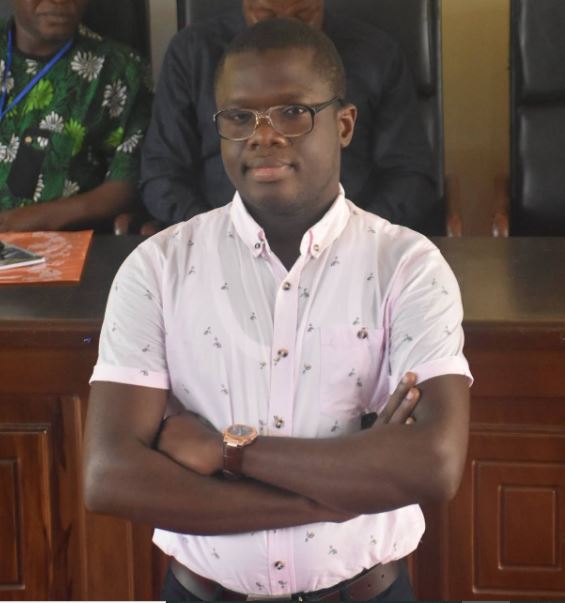
How to attract grants and write good research questions by South African varsity teacher.
A Nigerian -born lecturer at the University of Cape town, South Africa, Dr. Jeremiah Ogunniyi, has highlighted ways through which members of academic staff in Nigeria tertiary institutions, could write good research questions, that could attract grants from international donor agencies.
Dr. Ogunniyi was speaking at the opening of a 5-day Sponsored Scientific Research Workshop, organised by the Directorate of International Linkages and Research Development (DILRD), Adeyemi Federal University of Education (AFUED) Ondo, which began on Wednesday October 14 and slated to end on Tuesday October 20, 2026 in the institution.
Speaking on : " Research Idea to Research Question", the University scholar, who is currently serving as visiting lecturer at the Department of Physics, AFUED, explained that research projects usually " begins with an idea, but a strong study, requires more than an interesting topic".
The workshop facilitator, emphasised importance of constant reading by scholars, stating that the move would enable them explore more possibilities, and get acquainted with recent development in their areas of specialisations.
Dr. Ogunniyi listed various ways through which he said research ideas could emerge to include problems observed in a community, institutions, workplace or personal practice.
On what makes a good research, the renowned Atmospheric Physicist, advised interested researchers to always pay attention to interest, relevance of the research, its potential contributions to body of knowledge, its feasibility and potential significance to society before undertaken a project.
In addition, the University teacher, also stressed the need for intending researchers to be conscious of time saying, "When we are writing for research grant, we should be able to determine our ability to complete it within the time frame allocated for carrying out the research ".
On how research activities could be improved upon, the renowned scientist, said "if we want to improve our research, we must read journals, it is when we read journals, that we will understand what somebody has done on what we want to research" he stated.
The workshop facilitator spoke on what he described as research gap, stating that it is observed " when something has not been studied, when something has been studied, but not within a particular context, when there is conflicting findings in existing studies, when there is a limitation in existing methods and when there is insufficient or incomplete evidence from the study carried out".
As a way of addressing gap noted in research, the renowned physicist, stressed the need for researchers to first undertake what he called systematic review of what they want to undertake research on, "in order to find out what needs to be done. In addition, Dr. Jeremiah also harped on the need for researchers to be conscious of language used in order to avoid making vague statement".
According to him, a good research questions must be clear, specific, focussed, researchable, answerable with evidence, committed to solving genuine problem gap as well as aligning with the problem being researched.
Earlier in his remarks on the occasion, the Vice-Chancellor AFUED, Prof. Bayode Isaiah Popoola, represented by the AFUED Librarian, Dr. Azino Akpokuriere, commended the organisers of the workshop, and reiterated the commitment of the University Management to providing needed support to any academic engagement aimed at elevating the institution to greater heights.
Prof. Popoola described the workshop as very important and urged participants to avail themselves the opportunity given to them to participate in the exercise by applying the knowledge that would be acquired to improve their publications, in order to be able to secure research grants and contribute meaningfully to society, the University and the world at large.
The University Administrator emphasised importance of manuscript writing, stating that it helps researchers to communicate their findings and provide veritable sources of attracting funds needed to undertake impactful research.
In her address of welcome, the Director, Directorate of International Linkages and Research Development (DILRD) AFUED, Dr. Ale Adejumoke Bosede, stated that the workshop was organised as follow up to the one earlier held on research writing, which was facilitated by Dr. Smart Olugbeko.
She added that the 5-day workshop, would place more emphasis on "hand on training that will transform all the research ideas that we will be able to come up with competitive proposals, fundable projects, impactful publications and sustennable collaborations."
The AFUED DILRD Director, expressed gratitude to the sponsors of the workshop and management of the University for providing enabling environment for the programme to hold. She used the occasion to admonish participants at the workshop to ask meaningful questions, develop ideas, as well as acquire skills and generate output that can be applied".
According to her, "our goal is not only to attend the workshop, but to produce results, build capacity, secure external support, publish in reputable journals and to establish productive international partnership.
"We want this University to change from teaching to research, that is why we brought this research expert, for AFUED, the benefits would include increase in research visibility, improved grants, securing of stronger international linkages, enhancement of staff capacity and attainment of more competitive institutional profile.
" We want research at AFUED to generate knowledge, to attract investment and to deliver tangible benefits to society that can be patented, so that our impact as a University would be felt, and our ranking would also be enhanced " she remarked.
The workshop, which held at the New Center for Educational Technology (CET) building AFUED attracted participants from within and outside the University as well as eminent scholars and important personalities from all walks of life.